Safety Inspections Should Lead to Action, Not Just Reports
Workplace safety inspections are only useful when findings are recorded, corrective actions are assigned, and follow-up is done. Learn how to turn inspections into real safety improvement.
On This Page
- 01. Why safety inspections matter
- 02. Why inspection reports are not enough
- 03. The gap between finding hazards and fixing them
- 04. What should happen after an inspection
- 05. Why corrective actions need ownership
- 06. Why follow-up is the most important step
- 07. How digital systems can improve safety inspection follow-up
- 08. Common mistakes in workplace safety inspections
- 09. Practical inspection follow-up checklist
- 10. Key takeaway
- 11. References and further reading
A safety inspection is only the beginning.
Many workplaces carry out inspections, prepare reports, and file them away. But a report alone does not remove a hazard. It does not clear a blocked walkway, repair a damaged cable, service an overdue fire extinguisher, train a worker, or close a corrective action.
The real value of a safety inspection is not in the report itself.
It is in the action that follows.
01. Why Safety Inspections Matter
Workplace safety inspections help organizations understand what is happening on the ground.
They reveal unsafe conditions, unsafe acts, compliance gaps, weak procedures, poor housekeeping, fire safety issues, electrical hazards, PPE gaps, blocked access routes, and areas where workers may be exposed to risk.
A good inspection helps a workplace identify hazards before they turn into incidents.
OSHA explains that one root cause of workplace injuries, illnesses, and incidents is the failure to identify or recognize hazards that are present or could be anticipated. OSHA also recommends initial and periodic inspections to identify new or recurring hazards and to prioritize corrective actions based on severity and likelihood.
This means inspections should not be treated as routine paperwork.
They are part of prevention.
A workplace that inspects regularly is more likely to notice small issues early. A loose cable, obstructed exit, leaking container, missing guard, or poor storage practice may look minor at first, but each one can become serious if ignored.
Good inspections help safety personnel, supervisors, and management see risks clearly before they cause harm.
This kind of preventive inspection work is part of the broader Occupational Safety & Health support.
02. Why Inspection Reports Are Not Enough
A safety report is important because it creates a record.
It shows what was observed, where the issue was found, and what needs attention.
But a report is not the same as risk control.
A workplace can have many inspection reports and still remain unsafe if the findings are not corrected.
For example:
- A report may mention poor housekeeping, but the area remains cluttered.
- A report may note expired fire extinguishers, but servicing is delayed.
- A report may identify damaged electrical cables, but no replacement is done.
- A report may show blocked emergency exits, but the obstruction keeps returning.
- A report may recommend training, but workers are never scheduled.
- A report may assign corrective actions, but no one follows up.
In such cases, the inspection has identified risk, but it has not reduced risk.
That is the problem.
The purpose of an inspection is not simply to prove that someone checked the workplace.
The purpose is to help the workplace improve.
03. The Gap Between Finding Hazards and Fixing Them
Many safety systems fail in the space between identification and closure.
A hazard is noticed.
It is written down.
Everyone agrees it is important.
Then normal work continues, and the issue is forgotten.
This happens because there is often no clear system for moving from inspection finding to completed action.
A proper inspection process should answer the following questions:
- What exactly was found?
- Where was it found?
- How serious is the risk?
- What corrective action is required?
- Who is responsible for completing it?
- When should it be completed?
- Who will verify that it has been done?
- Has the control actually reduced the risk?
Without these answers, inspection findings remain open.
And open findings mean open risk.
04. What Should Happen After an Inspection
Every inspection finding should be converted into a practical action.
The action should be clear enough that the responsible person understands what needs to be done.
A weak finding may say:
“Improve housekeeping.”
A stronger corrective action would say:
“Remove stored materials from the walkway near the loading area, assign daily housekeeping responsibility to the stores team, and verify completion by Friday.”
The second statement is better because it is specific.
It explains the location, action required, responsible area, and timeline.
A good inspection follow-up process should include:
- Record the finding clearly — describe the unsafe condition or unsafe act without exaggeration or confusion.
- Assess the level of risk — decide whether the issue requires immediate action or planned correction.
- Recommend corrective action — the recommendation should reduce or eliminate the risk.
- Assign responsibility — someone should clearly own the action.
- Set a deadline — without a timeline, corrective actions can remain pending.
- Verify completion — safety personnel or supervisors should confirm that the issue has been corrected.
- Review effectiveness — the correction should be checked to confirm that the risk has actually reduced.
This inspect-to-closure workflow is exactly what my Safety Management System project is being built to automate.
05. Why Corrective Actions Need Ownership
Corrective actions fail when nobody owns them.
A safety report may say that an issue should be corrected, but if no person or department is assigned, the action can easily be ignored.
Ownership creates accountability.
For example:
- Housekeeping issues may be assigned to the department supervisor.
- Electrical faults may be assigned to maintenance.
- PPE non-compliance may be assigned to the site supervisor.
- Fire extinguisher servicing may be assigned to the facilities team.
- Training gaps may be assigned to management or HR.
- Documentation gaps may be assigned to the safety office.
When responsibility is clear, follow-up becomes easier.
When responsibility is unclear, everyone assumes someone else will handle it.
That is how hazards remain unresolved.
06. Why Follow-Up Is the Most Important Step
Follow-up confirms whether action was taken.
It also confirms whether the action worked.
OSHA's hazard prevention and control guidance recommends identifying and evaluating options for controlling hazards, implementing controls through a hazard control plan, and evaluating whether existing controls continue to provide protection.
This is important because completing an action does not always mean the risk has been controlled.
For example, if a spill is cleaned but the leaking container remains, the hazard will return.
If workers are reminded to wear PPE but the PPE is uncomfortable, unavailable, or unsuitable, non-compliance may continue.
If an emergency exit is cleared once but storage practices do not change, the exit may become blocked again.
Follow-up helps answer deeper questions:
- Was the immediate issue corrected?
- Did the same hazard reappear?
- Was the root cause addressed?
- Are workers following the new procedure?
- Is more training needed?
- Is supervision strong enough?
- Should the system be changed?
A workplace becomes safer when follow-up is consistent.
07. How Digital Systems Can Improve Safety Inspection Follow-Up
Digital systems can make safety inspection follow-up easier and more reliable.
Paper reports are useful, but they can be difficult to track when there are many findings, many departments, and several open actions.
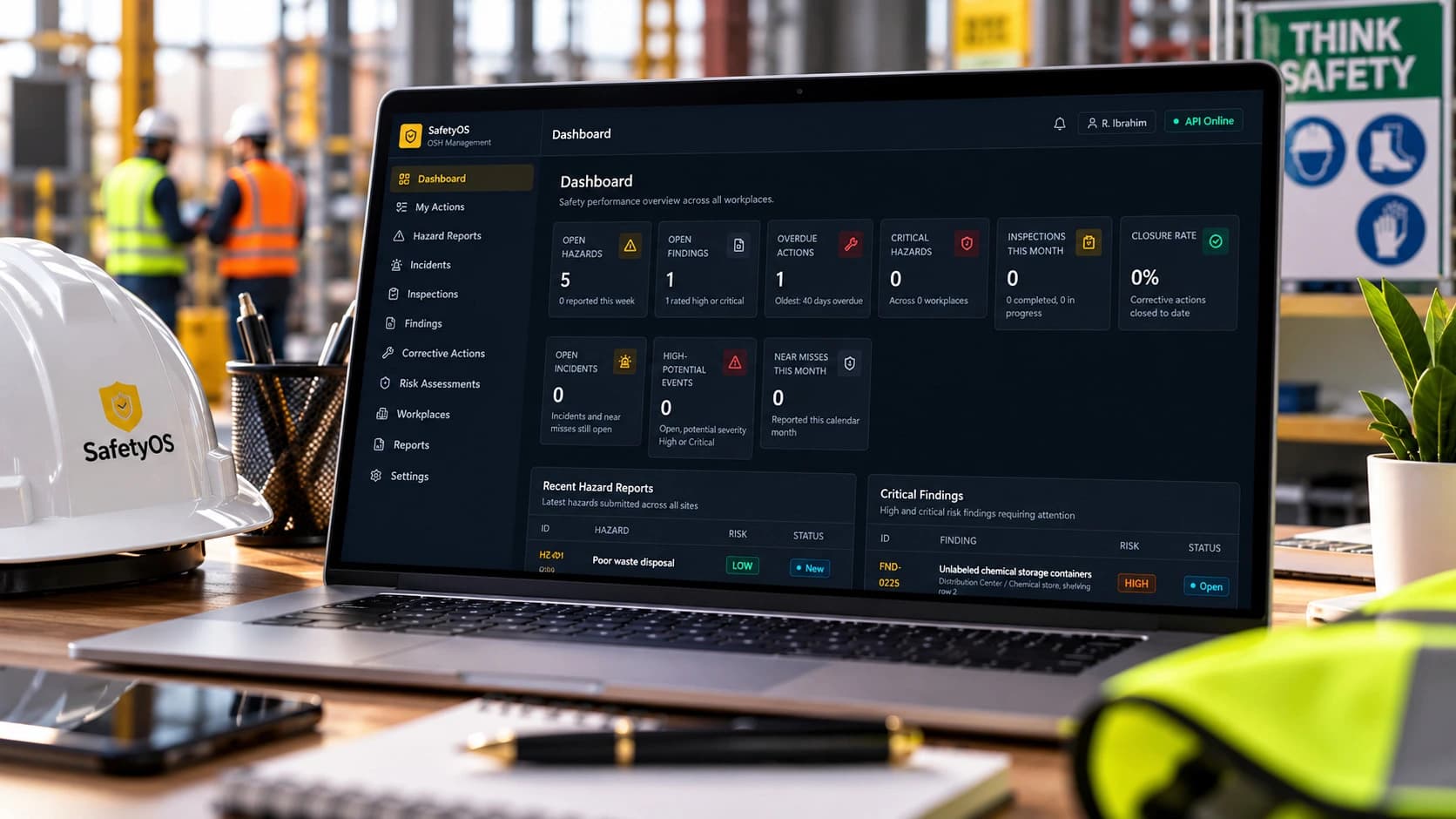
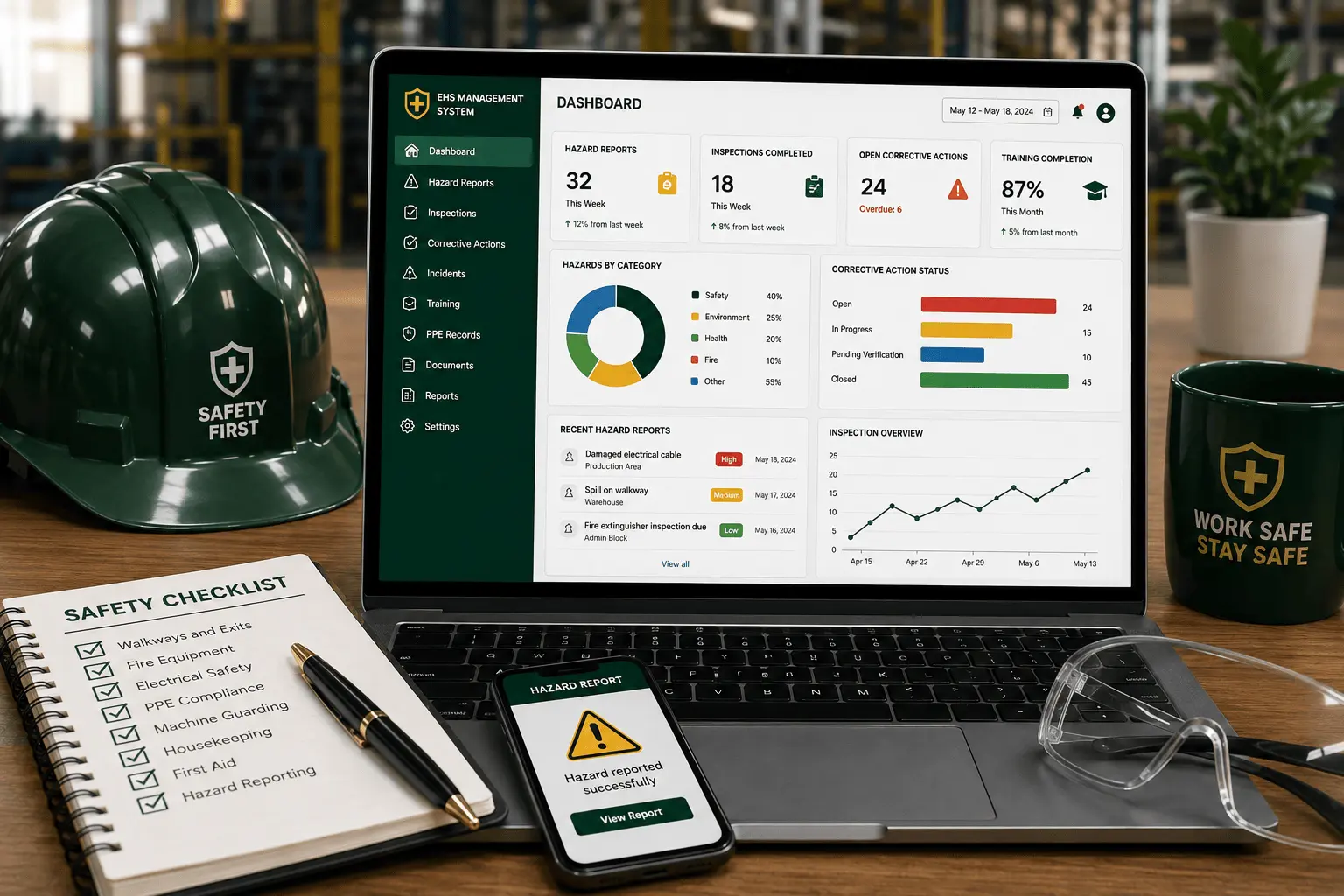
A digital system can help workplaces record findings, assign actions, set deadlines, attach photos, track progress, and confirm closure.
A simple digital inspection system can include:
- Inspection checklist
- Hazard category
- Risk rating
- Photo evidence
- Corrective action
- Responsible person
- Deadline
- Action status
- Follow-up notes
- Closure evidence
- Repeat issue tracking
This helps safety teams move from “we reported it” to “we corrected it and verified it.”
Digital tools do not replace safety knowledge.
They support better organization.
For safety teams weighing where to start, this is exactly the kind of gap covered by digital reporting systems like the Digital Inspection & Audit System.
08. Common Mistakes in Workplace Safety Inspections
Safety inspections can become weak when they are treated as routine exercises instead of improvement tools. Common mistakes include:
- Inspecting without follow-up — reports are prepared but corrective actions are not tracked to completion.
- Writing vague findings — a finding such as “workplace unsafe” does not explain what, where, or why it matters.
- Focusing only on visible issues — deeper risks like poor procedures, lack of training, weak supervision, or missing maintenance records get missed.
- Not involving workers — workers often understand daily risks better because they interact with the task directly.
- Closing actions without verification — an action should not be closed only because someone says it is done.
- Repeating the same findings — if the same issue appears again and again, the workplace may be treating symptoms instead of causes.
OSHA's hazard prevention guidance highlights worker involvement because workers often understand the conditions that create hazards and how they can be controlled.
09. Practical Inspection Follow-Up Checklist
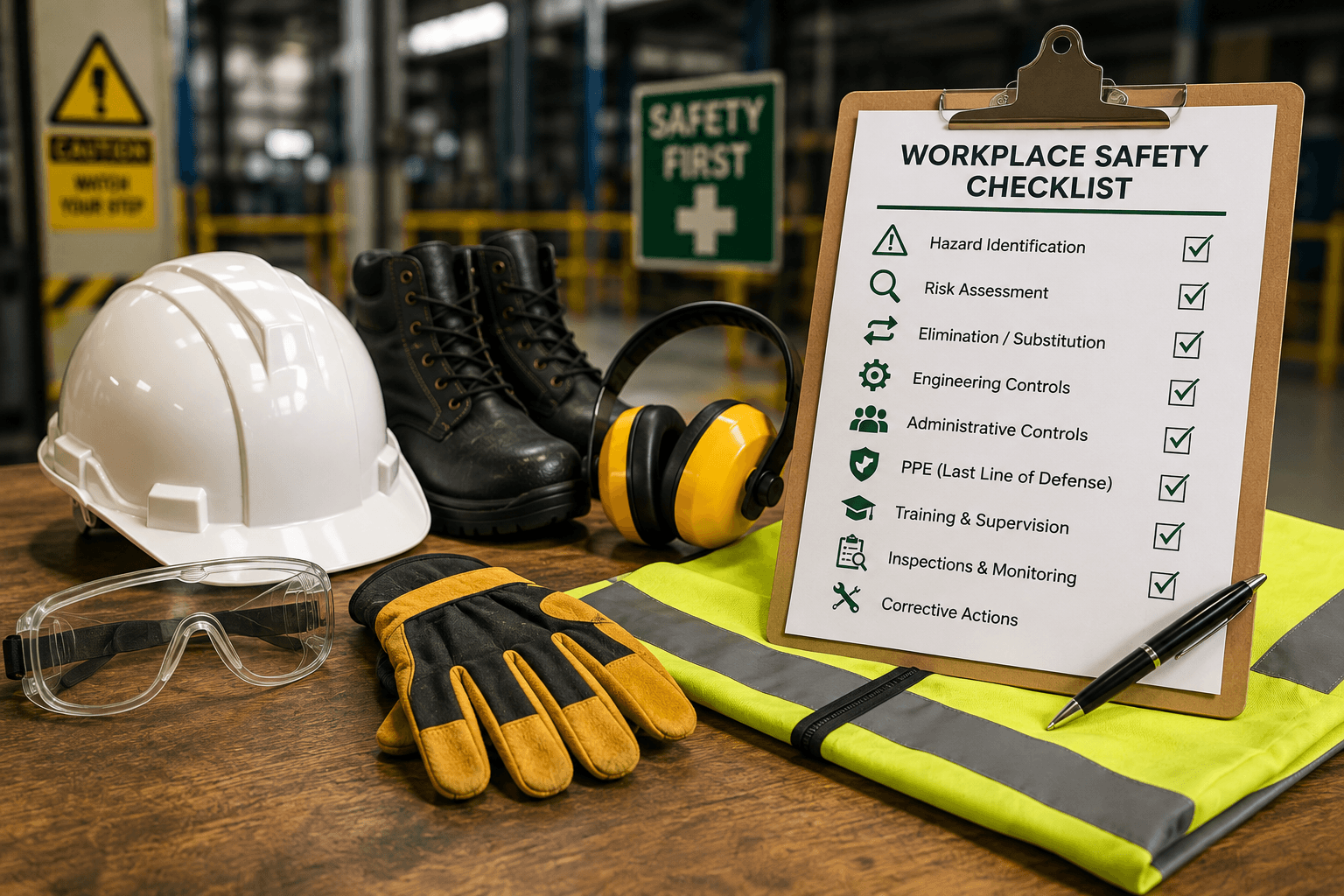
Use this simple checklist after each workplace safety inspection:
- Was every finding recorded clearly?
- Was the location stated?
- Was the risk level considered?
- Was a practical corrective action recommended?
- Was a responsible person assigned?
- Was a deadline given?
- Was photo evidence attached where necessary?
- Was the action followed up?
- Was completion verified?
- Was the control effective?
- Were repeated issues reviewed?
- Were records updated?
This checklist can be used in paper format or as a digital tracker.
The goal is not to complicate safety.
The goal is to prevent important actions from being forgotten.
10. Key Takeaway
A safety inspection should not end with a report.
A report is useful, but action is what makes the workplace safer.
The best inspection process follows a simple chain:
Inspect. Record. Correct. Follow up. Improve.
When workplaces treat inspections as part of continuous improvement, they become more proactive, organized, and accountable.
A safer workplace is not built by inspection reports alone.
It is built by what happens after the report.
If your organisation needs help turning inspection findings into a tracked, followed-up process, get in touch through my contact page.
References and Further Reading
- OSHA: Hazard Identification and Assessment.
- OSHA: Hazard Prevention and Control.
- OSHA: Program Evaluation and Improvement.